


Our main objective was to set up a curated marketplace that houses existing sustainable clothing brands so users can go to one place to supplement all their clothing needs. The marketplace would house a collection of established brands that pass the standard of sustainability and ethical practices regarding production, working conditions, and product quality.
Short Term - Incentives fast-fashion brands to approach more sustainable production methods so their brands can be a part of our marketplace, and ultimately be accessible and available to our shoppers, thus increasing sales for their brand.
Long Term - Incentives fast-fashion brands to approach more sustainable production methods so their brands can be a part of our marketplace, and ultimately be accessible and available to our shoppers, thus increasing sales for their brand.
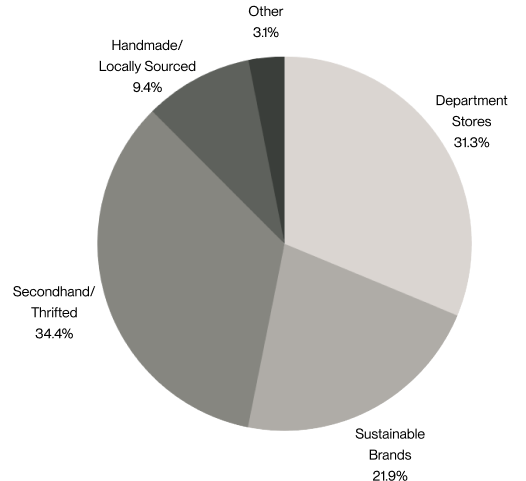
Out of participants ranging from ages 18- 57 years old, we found that most users purchase their clothing online and in-store with a small percentage purchasing their clothing on social media such as Facebook, Instagram, and Tik Tok. When asking our participants what their most important criteria is when shopping sustainably, they chose fair prices & fair wages for the workers producing their clothing. Although 81% of our participants have shopped sustainably in the past, 94% of participants said they are interested in shopping sustainably in the future. There is an interest in having access to sustainable clothing brands.
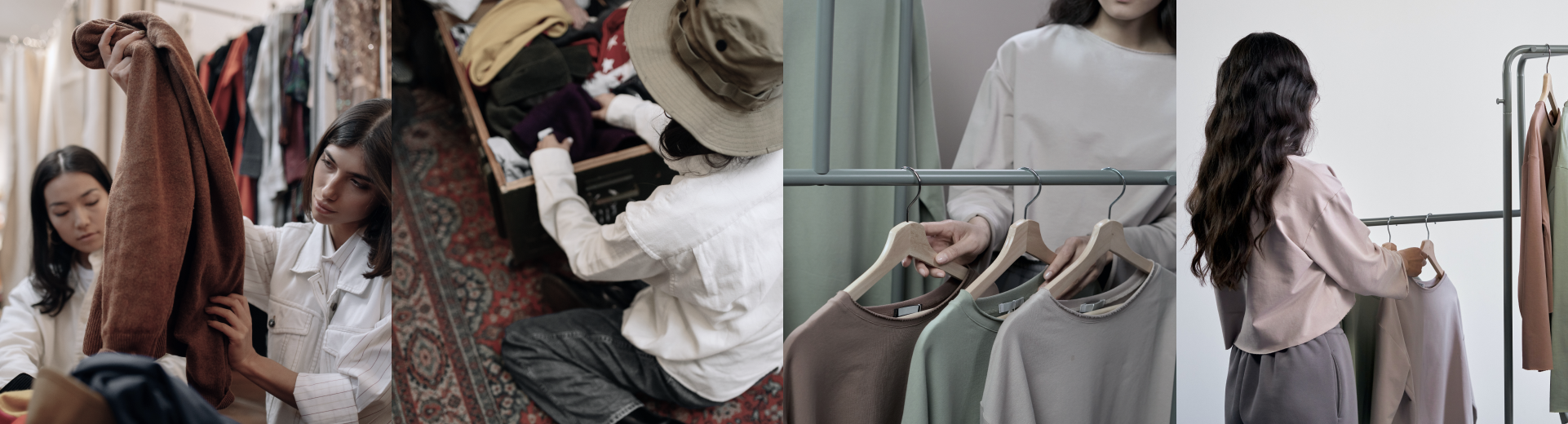
This shopper, ages 18 and up, shops secondhand, but often cannot find all the essentials they need. They are interested in continuing to express their style with unique, thrift pieces, but want to supplement their closet with sustainably made garments.
This shopper, typically aged 35 and under, is a shopper who mostly shops fast fashion, but is interested in shopping sustainably. They are looking to be more eco-conscious, but are less inclined to wear secondhand clothing. Their goal is to build a closet full of staple pieces that are timeless and durable.
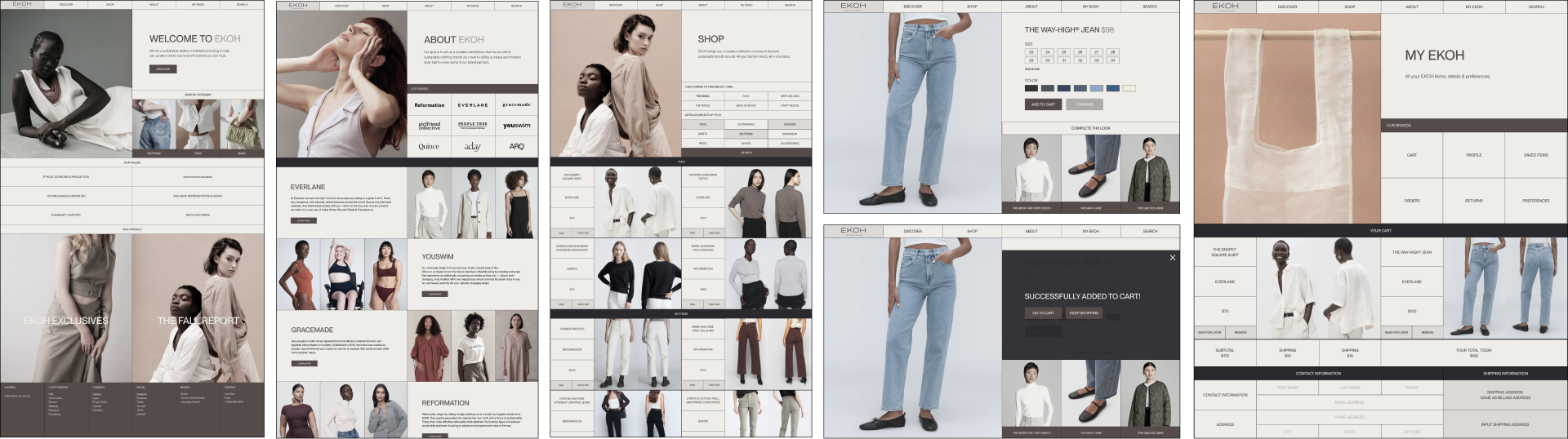
Staying aligned with our values was integral to the brand, so focusing on they were able to navigate to them was important.
Pros:
Users felt that the core values on the homepage created a desire for users to dive deeper into discovering the brand. Having the values as some of the leading homepage content made users enthusiastic about finding a brand that aligns with their values.
Cons:
Although our core values were on the homepage, users found that the lack of hierarchy in the way the section was labeled created a delayed response in acknowledgment.
As users transition from in-store shopping and fast fashion, we wanted to streamline their shopping experience and provide a filtering tool that would allow users to search for multiple items.
Pros:
Users enjoyed the filter feature, which allowed them to select up to three options to explore purchasing decisions. They valued having the ability to select multiple clothing options.
Cons:
Users were hesitant to use the filter option saying there wasn't an immediate desire to select more than one option. Users had to explore the filter tool and get familiar with its functionality.
Work with other tools to achieve success:
Copy.ai – Make affordable copywriting a reality
Termly – Generator for privacy policy, cookie policy, terms and conditions, disclaimer or return/refund policy
Webflow – Build custom blogs, portfolios, ecommerce stores